

Episode 201:
Simply Psych with Dr. Brian Dixon
WITH DR. TEA
·
DIRECT CARE PODCAST FOR SPECIALISTS
·
WITH DR. TEA · DIRECT CARE PODCAST FOR SPECIALISTS ·
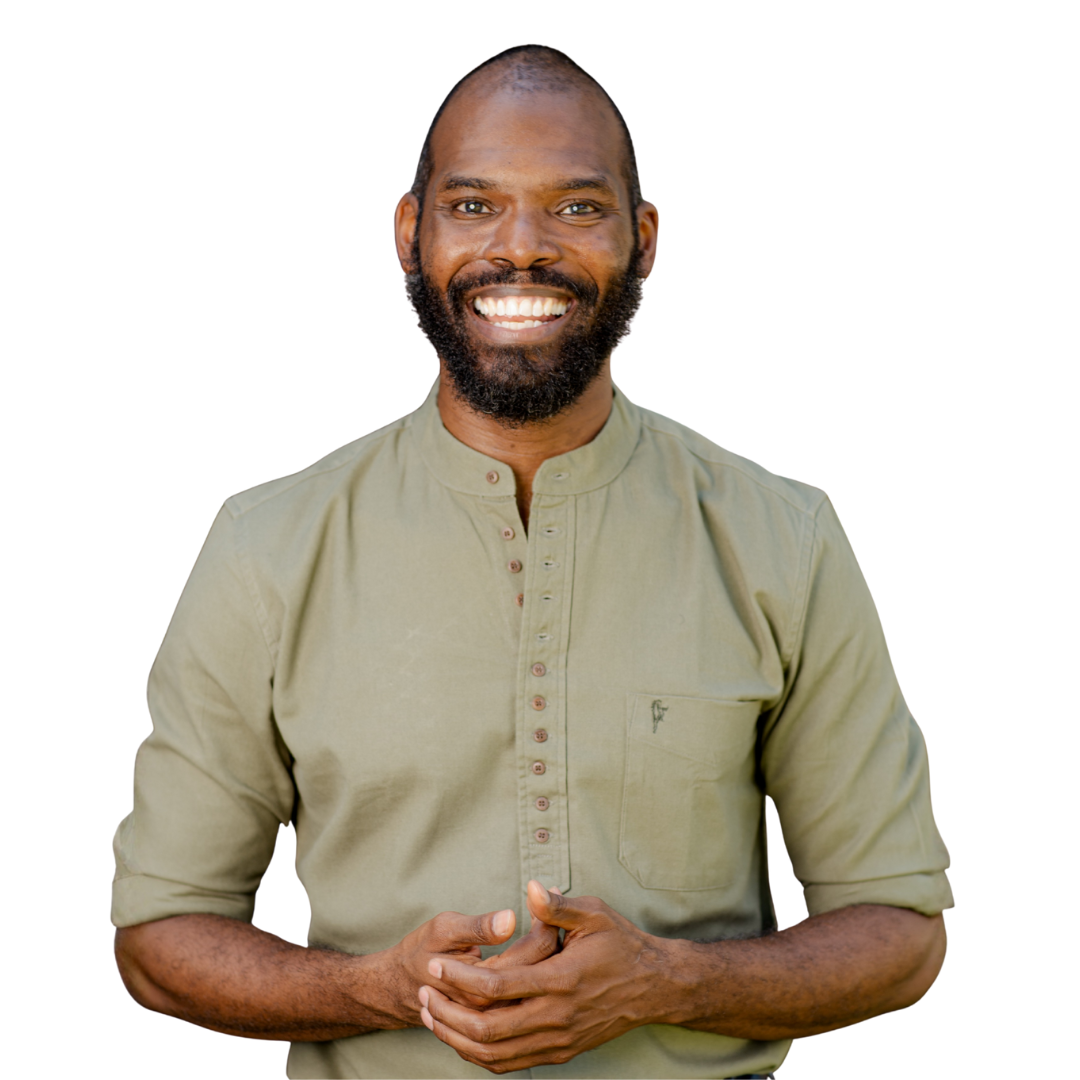
Direct Care Psychiatry with Dr. Brian Dixon
What you'll learn in this episode:
How Dr. Dixon left insurance-based psychiatry for a direct pay practice.
Lessons from his early mistakes in building and growing a practice.
Strategies for attracting patients, building a team, and creating balance with a fractional model.
And so much more!
Here's how to connect with Dr. Brian Dixon
Find him on:
Website: Simply Psych
LinkedIn: Brian J. Dixon, M.D.
TRANSCRIPT:
Dr. Tea Nguyen (00:53.634)
I would like to welcome Dr. Brian Dixon here. He has a really cool practice name called Simply Psych. He's the founder and CEO. Simply Psych is a badass private practice business coaching and operations for direct pay psychiatry practices. And is that also your clinic as well?
Dr. Brian Dixon (01:12.756)
No, so my clinic is actually called Mindful and it's here in Texas, so state-based, but yeah, and then the two work together very, very well.
Dr. Tea Nguyen (01:21.698)
Yes, you're the owner of Mindful in Texas and you offer psychiatry services. So welcome to the show.
Dr. Brian Dixon (01:28.428)
Yeah, thank you for having me, T. I appreciate it.
Dr. Tea Nguyen (01:30.978)
I love the simplicity of your website. Did you make that yourself?
Dr. Brian Dixon (01:34.08)
I did not. So this is where I'm a big believer in doing what you're good at and then don't do what you're not good at. And so while I'm good at kind of marketing and story, the actual building of things and graphics, no, I delegate all of that out and pay a wonderful marketing company for that part.
Dr. Tea Nguyen (01:50.766)
I'm so glad you brought this up because I was just coaching another doctor who, now, as business owners, we think we got to wear all the hats because we think that's the best use of our money or not spending the money. And in reality, I had to share with you, my husband broke a light bulb in the ceiling and he's a general surgeon and he went about fixing it himself. So, you know, he's wonderful. He does his best, but he doesn't change light bulbs every day. And the biggest concern I had was
Dr. Tea Nguyen (02:19.468)
You know, you break it, you can cut your hand, you can be out of commission. And then of course I hear him huffing and puffing back and forth, upset about the situation, going to Home Depot, buying the wrong bulb, going back to Home Depot. And my point in sharing that is number one, he's a lovely man. But number two, also, if we're not good at it, just let it go. Let someone else do the job. So that's all you, you reminded me of that.
Dr. Tea Nguyen (02:45.602)
You know, I myself as a business owner and guilty of trying to do all the things too. So I'm wondering what business ownership is like for you? How are things going? And if you can tell us a little bit about where you're from and how you came about building this business, I'd love to know.
Dr. Brian Dixon (03:01.58)
Yeah. So I'm originally from East Texas, a really small town. did all of the public school. I went to Baylor for undergrad, Texas A for medical school. And through none of that, did I understand entrepreneurship or business development. I had a job, I've been working since I was 16 and I'm just used to working for people. And so after finishing residency and fellowship at the University of Kentucky, I moved back to Texas and I worked at a few different places. And that's when I realized that I can't work full time for somebody. I just like to have control over my schedule. I like to be able to help my patients how I want to help my patients. So that was the point of being told by a large institution that I couldn't do certain things, even though I felt very strongly that I needed to be able to do those things. And so I left and put in my notice and I started a private practice and I made a promise to myself that I would not take insurance.
Dr. Brian Dixon (03:56.75)
And that was the hardest part of this whole entire thing is insurance based care. It's kind of a captive market. And so they capture all these doctors and podiatrists and pharmacists, and they keep everybody locked away in their networks. And here I was back in 2014, trying to stay out of the network race. And I'm built to practice. I made a ton of mistakes the first couple of years because I didn't know what I was doing.
Dr. Brian Dixon (04:23.55)
I eventually ran across a business model and a business coaching model that worked for me. Then I, yeah, I just started, I put my nose to the grindstone and I just kept seeing patients and figuring it out. And so now we're 11 years into this experiment and there's six doctors in mind, seeing patients. And then on the SimpliSight side of things, we have an amazing team that is helping to run practices and help me with all my business coaching. And, but I don't take any of it for granted. I work, I get up every day and I make sure to put in my investment and invest in myself and my people. And so far as working.
Dr. Tea Nguyen (05:02.93)
So 11 years as a direct care psychiatry practice. Is it typical for a psychiatrist to be out of network?
Dr. Brian Dixon (05:07.373)
Yes. So yes and no. So back in the day, we had to be out of network because insurance wouldn't pay us anything. It's the craziest thing when I say this, but there were lots of insurance companies who said, we're not going to pay you to do non-medical stuff. We're not going to pay you to do therapy. so, yeah. So as a result, lot of psychiatrists were like, well, screw that. I want to be able to do therapy. So they just went out of network.
Dr. Brian Dixon (05:37.568)
Nowadays it is a little bit different. The whole entire industry has changed. It's really weird because we have these aggregate insurance companies that are on the prowl. So the headways, the almahs, the grows, the rules, and they create some kind of chaos in how people deliver care. But honestly, it's the best time ever for patients to be able to get mental health care because now there's more access points than ever. Again, direct pay is best. I don't keep people from seeking out care where they can get it.
Dr. Tea Nguyen (06:06.636)
Yeah, I feel like psychiatry was an early model because, you know, myself going through therapy, some, some would take insurance and others wouldn't. And I feel like it was just kind of a normalized process of getting mental health that they just need the time with their clients and their patients and they just weren't giving that. And so it felt like a natural transition to be out of network. Was that a natural pro progression for you too?
Dr. Brian Dixon (06:33.87)
100%. So for example, one of the things that the insurance based model forced upon us, especially in the big group systems is you had to see someone every three months, even if you didn't need to see them every three months, because that was just kind of the cadence and what they thought was best. And I would push back and go, well, I can see them in four months or five months. I mean, they're going to be fine as long as they message me. Well, the system doesn't reimburse that way. And so when I went out of network,
Dr. Brian Dixon (07:01.056)
I said, I'm going to build the practice that I want to work for and that works for my patients because some of them don't need to come in every three or four months. And I was able to extend that time. And more importantly, I was able to get more people in to be seen. So yeah, I like that flexibility. And it is honestly just changed my life and being direct pay. It's been, it's been amazing.
Dr. Tea Nguyen (07:24.334)
So what has made it work for you? Like how did the patients discover you and choose to pay out of pocket?
Dr. Brian Dixon (07:30.734)
Yeah, so that's the million dollar question, literally, which is, in my opinion, you have to make yourself known. As my friend and business coach, Nicky Calton, always says, just show up. And so I would show up everywhere. I would go to school. I would go, I would sit on panels at churches. I'd sit on panels at the chamber of commerce. Like anytime someone said mental health, anything, I would show up and I would always have my business cards.
Dr. Brian Dixon (07:58.67)
I kept my website up to date. And then word of mouth, I would let people know I'm always taking new patients. Even if I was full, I would still say I'm still taking new patients because at the end of the day, keeping that referral pipeline is really, really important and then being accessible. So when therapists would need something, I would give them my number and they could text me. And so those were some very like concrete ways of making sure that people knew who I was, that I made sure to show up.
Dr. Brian Dixon (08:26.922)
And then I would do my best to kind of follow up as best as I could to let folks know, hey, I got this referral in, you know, with all the HIPAA restrictions that go with all of that. So, consent. But yeah, closing that loop, I think is actually also very important.
Dr. Tea Nguyen (08:43.178)
Is it hard to market yourself as a psychiatrist? Because I'll tell you, in podiatry, there are segmented things that podiatrists can do. There are non-surgical podiatry, there is sports medicine, there's diabetic foot limb preservation. There's a lot in such a small specialty area. For psychiatry, is it easy or hard to market yourself in what you do?
Dr. Brian Dixon (09:07.755)
Yeah, that's actually a very interesting question. It's a little bit of both. So there aren't that many psychiatrists out there. Like in Texas, there are 2,600 licensed psychiatrists, according to the online research. So you can still get some purchase, meaning some market share, some exposure. And then I'm a child and adolescent psychiatrist and a pediatrician because I did a combined program. So that actually helped a lot as well.
So the niche is even though there's maybe 750, maybe less than a thousand child psychiatrists for the whole state of Texas, and that's 30 million people. So that was beneficial. It's hard just because of the noise. So the way that the marketing system works is whoever buys the keywords and whoever spends all the money on search engine optimization tends to get the eyeballs. And so if people are only going through the internet to try to find you, it's really hard to get above the noise.
Dr. Brian Dixon (10:05.598)
So that's where I think it's really important to know your local network and be very connected on your local level. And it's the best piece of advice I got and that I try to give.
Dr. Tea Nguyen (10:17.048)
So local networking has been a sure way for you to get that referral pattern and following up and just doing that day in and day out it sounds like.
Dr. Brian Dixon (10:27.59)
Literally. Yep. It is, yeah. And it's one of those things I don't want to give the impression that I like, I'm eating and breathing, just marketing all the time. But a friend of mine said I took a tennis class, cause I wanted to learn how to play tennis and I took it with a real estate guy. And he said in the real estate industry, the mantra is always be closing ABCs, which is, you know, push to close. It's not, Hey, we're just here to look at houses. It's Hey, we're here to look at houses so you can buy.
Dr. Brian Dixon (10:57.354)
And so I took that same mantra, which is, I'm always going to talk about mental health because I want everybody to get in and see a therapist. Now you may not see me as a therapist or a psychiatrist, but everybody needs somebody to talk to. And by doing that, I can consistently continue to get referrals because I'm that guy that's always talking about mental health. So yeah, always be, always be closing, always be talking about whatever your thing is.
Dr. Tea Nguyen (11:22.414)
I really love that the ABC always be closing because well, I just really like real estate agents because they are the friendliest people. They teach me so much about what marketing truly is. And I have folks clearly in their retirement age, never looking to retire because they love their job so much. It's built on relationships. They are selling to children, grandchildren. They're taking care of estates and trust. So I feel like we have a lot to learn in that industry, which also brings me to what did that look like?
Dr. Brian Dixon (18:08.268)
Yeah, so it was number one, just the sheer number of intakes or just the number of people who were interested in becoming patients. So that was one. And then I started to feel that burnout, like I was charting on the weekends and charting in the evenings. And I just had so much, that was another metric. A third metric is, could I go out of town and not log in? So having someone on who could serve as a backup. So that was another metric.
Dr. Brian Dixon (18:33.214)
And then just affordability, just making sure that your overhead is low enough that you can justify bringing or just robust enough, either low or robust, either depending on what you're trying to do, to make sure that you can support another person coming on and then have them pay, not pay, but you can generate enough revenue to justify their salary or percentage or whatever you do. So those are some like just basic metrics that I kind of went off of.
Dr. Brian Dixon (19:00.634)
And then there was a lot of just hoping that it would all work out because I did hire some physician assistants and some psychiatrists that just did not work out. They were not aligned with me. There was no way that I could have known that at the time. know, rotating them out of the company is not easy. So that's a different skillset. Being able to terminate or off board someone is its own set of skills that you will have to learn as a business owner.
Dr. Tea Nguyen (19:28.052)
You have to share with us some early mistakes you've gone through because you already poked at it when you were mentioning there were some big mistakes and if you can spare some of us a few steps. What happened? What happened in the beginning for you?
Dr. Brian Dixon (19:41.72)
Yeah, so a couple different things when it comes to overhead. So I went and rented space that I signed a 10 year lease on an office and that was a terrible idea. You shouldn't be in anything for 10 years, especially nowadays. I'd say rent month to month if you can. So that was a big mistake. We just got out of that 10 year lease this year. So there you go.
Dr. Brian Dixon (20:05.012)
Another mistake is, I hired a reception. So I hate to say this for most folks, but people nowadays are so used to digital and being able to do a little bit of the self-service stuff that I hired for reception and it was always a problem. Like in-person reception, because people would call in or they'd get sick or there's always something. And I eventually went reception free and I would coach and train my patients on how to manage that side of things. And overall, it seems to work. Getting into loans, business loans that are not ideal. So it does pay to shop around for, if you're gonna do a small business association loan, great. If you're gonna do a private loan, it does pay to talk to bankers, shop around, who can give you the best interest rate. And then nowadays it's really easy.
Dr. Brian Dixon (20:54.538)
If you show that you're making revenue, there's loans that you can get through some of your payroll services or just kind of short-term loans that you can use to bridge if you need it. So I've made all those mistakes as well. So yeah, feels like I've, and then yeah, hiring the wrong people and having to terminate them. I've learned that I need to have someone else because I'm super nice. And I go, I tend to hire on hope. And that's a terrible idea. Don't hire people who you hope will work out.
Dr. Brian Dixon (21:24.012)
They need to show you that they have a track record of doing whatever that job description is. Yeah, that's a start. I'm sure there's even more, but yeah.
Dr. Tea Nguyen (21:32.078)
I've gone through the same thing, long lease, long business loan, hiring on Hope. I honestly think those are just things we got to go through ourselves to really learn the lesson. We can share all that we can, but some of us, we're just a little bit more hard-headed than others. have to learn the path. yeah, hiring on Hope is a big one because I don't think a lot of us went into medical training.
Dr. Tea Nguyen (21:55.384)
to be good at HR. Some people are really good with people, most of us, introverted types who like to read and learn. It's a new skill set for us. So for you, what were your skill sets and what did you know you were going to outsource?
Dr. Brian Dixon (22:10.71)
Yeah. So I luckily stumbled upon the traction model by Gina Wickman. He's the entrepreneurial operating system. And he talks about every business having seats. And so again, if you just look online, it's all online, but I'm a visionary. So I think about the big picture. That was a skill set of mine. And then I'm a marketer. I like to share the story and share the brand. I'm a decent salesperson. And so, but I'm a terrible operations person, operations meeting.
Dr. Brian Dixon (22:37.826)
Keeping up with all those policies and procedures and updating job descriptions and all that stuff. I'm terrible at that. So I did outsource that. And that's what simply Syke became as an operations company. And I hired a whole bunch of operations people to be in the operations company. So that's how that came into existence. And then I'm a terrible financial person because again, money always made me feel uncomfortable.
I'm getting a little bit better with it now. And so I have a great financial CPA firm that does all of the taxes and accounting and bookkeeping because I'm terrible at it. So yeah, I'm the messenger, the primary messenger, primary salesperson of the company, but the operations and the finance, I absolutely delegate out to folks who are much better than I am.
Dr. Tea Nguyen (23:25.058)
You're breathing over this as if we all understood what you're saying. So let me break it down a little bit. I will look into the traction model, but very similar to the five working geniuses where it talks about your strengths. And I think that's the first thing doctors need to kind of investigate. What skills are you really good at besides patient care, of course, because without you, there is no patient care, but the skill set that you arrive with so that you're not pushing up a hill in order to build this type of practice.
Dr. Tea Nguyen (23:55.07)
And I'm in the same line. I'm more of a big thinker, a visionary, and my deficits are those tedious paperwork, billing codes, cleaning up the chart notes, like all of those things that could actually get me into legal trouble. was like, that's actually the reason why I left insurance, one of many. But I was like, this is so tedious. It's burning my brain cells. I feel like I've just gotten dumber doing this. And so now that I know my skill set and the stuff that I'm not so good at, like that's...
Dr. Tea Nguyen (24:23.47)
how I'm looking to build the team. I'm so glad you brought this up because for some of us, we're in our direct care practice. We want to expand our energy, our time, our reach. And so understanding the operations is a big deal. We were just never taught. We were just taught to do everything at any cost. And actually, they tell us we need to do everything that we can to figure it out because we're smart enough to figure it out. But we're terribly good at all the things. We can just open up the book, go to Google, you know.
Dr. Tea Nguyen (24:53.804)
but we're not good at it.
Dr. Brian Dixon (24:55.214)
100 % everything you're saying is absolutely spot on. There's that guilt and if we don't resolve that guilt physician knows that self clinician knows that self. If you don't know yourself very well, you'll get pulled into directions that you should not be in.
Dr. Tea Nguyen (25:10.582)
We become the people pleasing, yes sir, yes ma'am type of person. And then we quickly find ourselves burning out. I think burnout is such a big conversation. Well, really it's, what is the word, moral decay?
Dr. Brian Dixon (25:27.212)
moral injury.
Dr. Tea Nguyen (25:28.654)
It's the same thing, moral injury. It's forced upon us. It's not an individual person's problem to carry. It's a systemic issue in reality. And of course, as you're in mental health, you know this far in greater depth than I could ever try to explain it. But I know there are a lot of doctors who are ready to leave clinical practice. They are just over it. What would you say to them about this model?
Dr. Brian Dixon (25:54.528)
Yeah. So I would say first off, do what is best for you. So don't let me guilt you into staying in something that you feel is toxic and unhelpful, even though I think that there is a path where you can do fractional direct pay medical care and whatever else you want to do. The key is either building, buying, or getting employed by a system that works for your spirit. So for example, I love being a psychiatrist. I love my practice. It's great.
Dr. Brian Dixon (26:24.288)
I cannot do even direct pay psychiatry 40 hours a week. I decided I tried that. I did that. And I was like, God, this is terrible. And at first I was like, am I burning out of my own company? What the hell is this? And then it dawned on me. It's because I'm doing too much of it because too much of a good thing is not necessarily a good thing. Moderation is everything. And so I now know that two to three days a week is my sweet spot. One day a week is not quite enough, but two to three days a week is my sweet spot.
Dr. Brian Dixon (26:53.742)
Three to four to five is untenable and bad. And so what I'm gonna do now is I'm gonna teach that idea and that model to as many clinicians as possible. I think you can, now surgery may be a little bit different. I don't know the surgery world, but for everything else, two to three days, I think is more than enough. And then you feel the rest of that time doing other stuff that brings you joy. That could be teaching, it could be making muffins, it could be, I don't know, being a blogger. Go do other stuff so that then you can keep your clinical practice because you spend a lot of time and effort. So that's my hope is that people will hear this and go, I don't have to leave because it sucks so bad. I can find or build or buy into a practice part-time that I can keep for the rest of my life and then do other stuff.
Dr. Tea Nguyen (27:46.478)
I really love the way you framed it as a fractional direct care practice because I think I've been writing on that since its inception, not realizing that that's actually normal because I'm doing all of these other things. And it's just so validating to hear it, especially from you who are seasoned and who has been able to scale your clinical practice. And you are also an entrepreneur helping other doctors and coaching others as well. And I feel like sometimes we just need permission, even if it's just a casual, hey,
Dr. Tea Nguyen (28:16.172)
You can do this on your own time, on your own pace, especially for many of us who are, you know, I say that I'm in recovery because I was in the insurance model and that has been torturous. And when we jump from something that was so busy, so volume driven, and we try to recreate some of that trauma within our direct care practice, we end up in the same cycle. I mean, thank you for giving us permission to design our practice however we want.
Dr. Tea Nguyen (28:43.83)
and normalizing that. And so I will be supporting you all the way to help others realize that you can totally do this at your pace. Any last lessons you'd like to share with the listeners today?
Dr. Brian Dixon (28:54.092)
Yeah, and your network is everything. So I got to meet you as part of a conference, right? So, and that was me stepping outside of my comfort zone, doing something that, because for a long time I had said, I'm giving up on organized medicine. I'm just not going to go to conferences. I'm just not going to do anything. But as an entrepreneur.
Dr. Brian Dixon (29:13.822)
The network effect is real and it's important. And even if someone is not going to directly buy from you, they know someone who knows someone who knows someone who may need something from you. I would share with your listeners, with you, with everybody . Even though we're, most of us are introverted, step outside your comfort zone, go do things and connect with people in ways that you may sow the seed for you to reap a bounty later on. That would be my main takeaway.
Dr. Tea Nguyen (29:42.894)
Thank you so much for that. If people want to find you, what's the best way?
Dr. Brian Dixon (29:46.7)
Yeah. So I do have a website, drbriandixson.com and then I'm most active on LinkedIn. So if you look for Brian J. Dixon, apparently there's another Brian J. Dixon out there in the world. But yeah, if you just look for Brian J. Dixon, MD on LinkedIn, those are kind of my two most prominent places. And then I'm working on getting my Substack back up and active. I think I have like 20 newsletters and I'm going to get back into that because I really like writing for myself, just for writing sake. So you can find me on Substack as well.
Dr. Tea Nguyen (30:19.223)
Thank you so much for being here today as our guest. And I look forward to chatting with you in the future and see what holds, what is there for you.
Grab The Free Direct Care Guide For Specialists
Just enter your email below and we’ll send it straight to your inbox — and don’t forget to check your spam folder just in case!
