
Episode 238:
The Fibroid Doc with Dr. Cheruba Prabakar
WITH DR. TEA
·
DIRECT CARE PODCAST FOR SPECIALISTS
·
WITH DR. TEA · DIRECT CARE PODCAST FOR SPECIALISTS ·
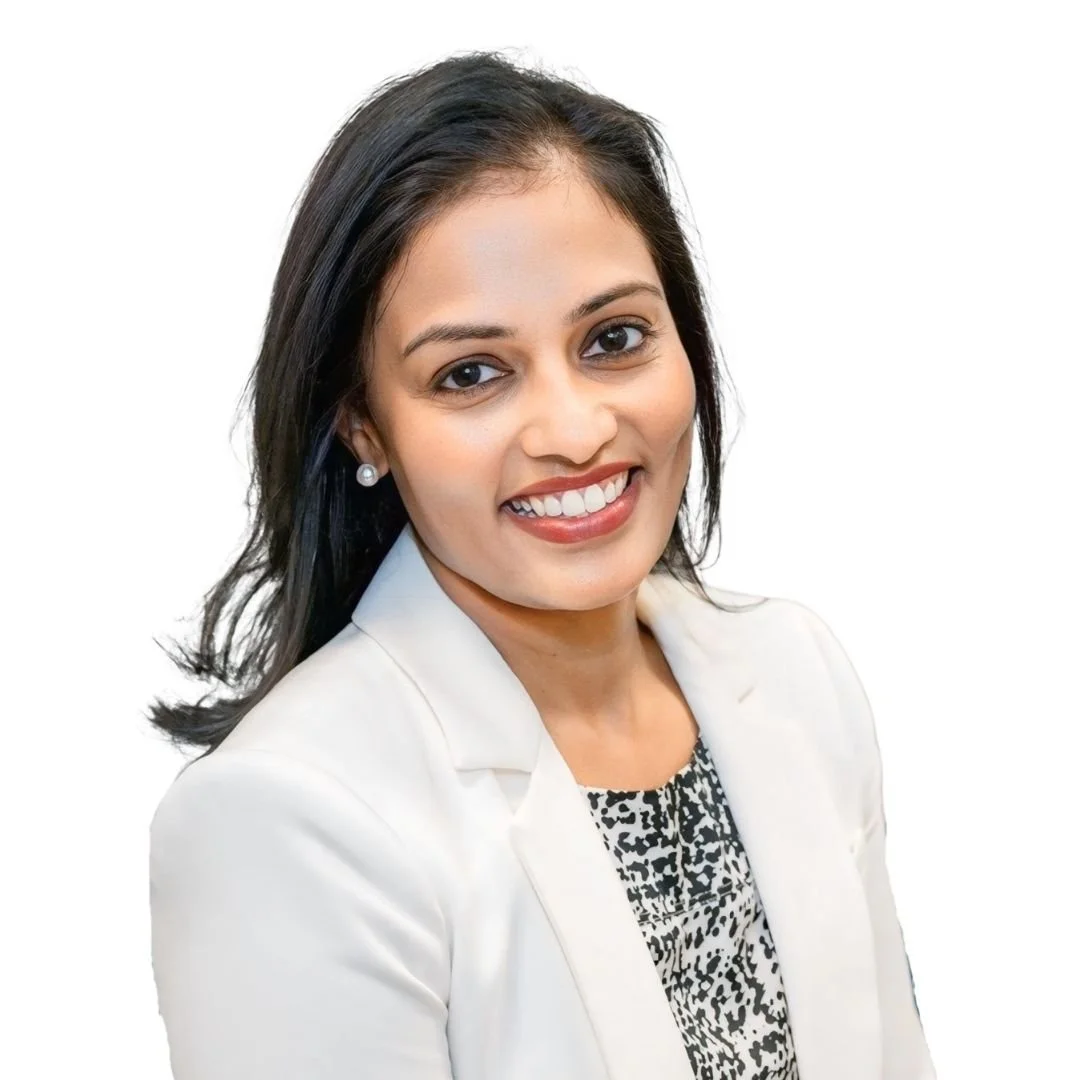
Direct Care OB/GYN with Dr. Cheruba Prabakar
What you'll learn in this episode:
Why Dr. Cheruba Prabakar left employed medicine to build her own direct-care OB/GYN practice.
How she created a practice combining personalized gynecologic care, memberships, and surgery.
Why fibroids became a major focus of her practice and how she helps women navigate their treatment options.
How she went from practicing solo to hiring another physician and expanding her capacity.
And much more!
Here's how to connect with Dr. Cheruba Prabakar
Find her on:
Personal Website: The Fibroid Doc
Practice Website: Lamorinda Gynecology and Surgery
Instagram: @thefibroiddoc
YouTube: @TheFibroidDoc
The Fibroid Doc: How Dr. Cheruba Prabakar Built a Direct Care OB/GYN Practice
For many specialists, the expected career path is straightforward: finish training, join a large healthcare system, see patients, perform procedures, and work within the insurance model.
Dr. Cheruba Prabakar knew there had to be another way.
In this episode, Dr. Cheruba Prabakar, a board-certified OB/GYN and fellowship-trained minimally invasive surgeon, shares how she went from seeing 20–25 patients a day in 15-minute appointments to building a direct care practice designed around more personalized, comprehensive care.
Today, her practice combines direct-pay gynecologic care, memberships, surgical services, and concierge-level support. She has also expanded her team, bringing another physician into the practice, while building an educational platform around one of the conditions she sees most often: uterine fibroids.
Her story is proof that you don't have to accept the version of medicine you were handed. You can build something different.
When Medicine Started Feeling Transactional
After seven years as an employed physician, Dr. Cheruba began to feel like a robot.
Seeing 20–25 patients a day with only 15 minutes per appointment left little time to actually listen to patients, understand their medical and social history, or address the questions they had been waiting months to ask.
She loved practicing medicine—but the system was making it difficult to practice the way she believed medicine should be practiced.
That realization became the catalyst for opening her own doors in October 2022.
Building a Direct Care OB/GYN Practice
Dr. Cheruba didn't simply recreate the traditional insurance practice and change the payment model.
She built a practice around the type of care she wanted to provide.
Her model includes traditional gynecologic care for patients who want personalized access to their OB/GYN, along with membership-based care for patients with more complex and time-intensive needs, including menopause management.
She also developed a surgical model that allows patients to receive care at in-network facilities while working directly with her for the surgeon's fee.
The result is a hybrid approach that gives patients greater access and personalized attention without forcing them into a completely membership-only model.
Finding the Right Model Through Trial and Error
One of the biggest lessons from Dr. Cheruba's journey is that your practice model doesn't have to be perfect on day one.
Her membership model evolved.
As she began offering menopause care, weight loss, and hormone management, she realized how much time was being spent managing patients through messages and portals.
Instead of continuing to squeeze that work into a traditional fee-for-service structure, she redesigned the experience.
Membership gave patients ongoing access while giving her the time and structure to provide better care.
Her surgical pricing evolved in the same way. She considered her pre-op and post-op time, operating room time, travel, and the overall value of the care—and adjusted her pricing as the practice became busier.
There was no blueprint.
She built, tested, learned, and adjusted.
Becoming a Practice Owner
Growing a practice creates an entirely different set of challenges.
Dr. Cheruba recently brought another physician into her practice—an endometriosis specialist who had previously worked with her and was also burned out by corporate medicine.
Instead of asking that physician to start from scratch, Dr. Cheruba had already built the framework.
Now, the practice can serve more patients while creating a workplace where other talented physicians can practice medicine differently.
Her next goal is to continue growing the team so she can gradually step back from some of the clinical workload and spend more time running the business, speaking, teaching, and educating.
Becoming the Fibroid Doc
Fibroids have become one of the defining areas of Dr. Cheruba's work.
After seeing countless women struggle with heavy bleeding, pain, fertility challenges, and other symptoms, she became passionate about helping patients understand that these symptoms shouldn't simply be dismissed as “part of being a woman.”
Her personal connection to fibroids runs deep. Her own mother experienced them and ultimately underwent a large hysterectomy.
That experience, combined with years of treating patients with fibroids, inspired Dr. Cheruba to build an educational platform around the condition.
She became known as The Fibroid Doc and began creating educational content to help women understand their symptoms and treatment options.
Turning Clinical Expertise Into a Book
That educational mission eventually became a book: Fibroids Finally Heard.
Rather than creating an academic textbook, Dr. Cheruba wanted a resource patients could actually use.
The book covers symptoms, fertility, treatment options, and navigating the healthcare system, giving women a single resource instead of forcing them to piece together information from social media, Reddit, and countless websites.
What makes the story even more interesting is that writing the book wasn't part of her original 2026 plan.
She simply decided to make it happen—and used her entrepreneurial community and available resources to turn the idea into reality in time for Fibroid Awareness Month.
The Reality of Entrepreneurship
Dr. Cheruba is also honest about what it takes to build your own practice.
Direct care and entrepreneurship aren't easy.
Owning your practice doesn't mean sitting on the beach while everything runs itself. There are new problems, new responsibilities, and plenty of uncertainty.
But there are also enormous rewards.
Her advice to physicians considering this path is to talk to people who are already doing what you want to do.
Don't rely solely on the polished version of entrepreneurship you see on social media. Find physicians who understand the challenges. Build a community. Get coaching. Surround yourself with people who can help you navigate the difficult days.
Because, as Dr. Cheruba reminds us, pain is less painful in groups.
A Final Thought
Dr. Cheruba's journey is about more than building a direct care OB/GYN practice.
It's about reclaiming the ability to practice medicine on your own terms.
It's about creating more time for patients, building a team around shared values, developing expertise around a problem you care deeply about, and finding new ways to use your medical degree.
For physicians who feel burned out by corporate medicine or wonder whether a direct specialty care practice is possible, Dr. Cheruba's story is a powerful reminder:
There isn't just one way to practice medicine anymore.
You can build the practice you actually want.
TRANSCRIPT:
Tea Nguyen, DPM (00:53.698)
Welcome to the podcast, Dr. Cheruba.
Dr. Cheruba Prabakar (00:56.241)
Thank you so much for having me.
Tea Nguyen, DPM (00:58.166)
If you don't mind giving our listeners a brief bio about who you are and what life was like for you before you had your current practice?
Dr. Cheruba Prabakar (01:08.002)
Yes. so I am Dr. Prabakar. I'm a board-certified OBGYN and a fellowship trained minimally invasive surgeon. I trained in the East Coast and spent a lot of time learning about fibroids, endometriosis, and just complex GYN conditions. And then moved out here to the West Coast. I practiced in the Bay Area and prior to starting my practice now, almost about four years ago, I was an employed physician in a large healthcare system, which you know, had its pluses and minuses, but it was good to to be in such an environment when I first started out, just getting a lot of cases done and just seeing a lot of patients and just building the confidence to to practice clinical medicine you know, by myself.
Tea Nguyen, DPM (01:54.52)
Serious question. Which coast is better, the east or the west?
Dr. Cheruba Prabakar (01:58.798)
You know, I've been here for a decade.
Tea Nguyen, DPM (02:04.31)
But I'm Okay; you don't have to answer it. I've always been a West Coaster. Well, more importantly. So you were in an employed situation, but now you have your own private practice. Can you tell us a little bit about how that transpired?
Dr. Cheruba Prabakar (02:18.562)
Yeah. So after about seven years being an employed physician, I started to feel like I was a robot. You know, I was seeing a lot of patients, twenty, twenty-five patients. I only had fifteen minutes per patient. So it just became very transactional. And I'm a very I love to chat with my patients and get to know them. And I just felt like I couldn't do that anymore and really get into delving deeper into even people's medical history, let alone their social, social history. And then I figured, you know, I really want to spend more time with patients. This is what I learned in medical school, you know, about taking a good history. And by the time I took a good history, the appointment was over. So I decided to build a practice my own way, do slight things slightly different. And so that's what led me to opening my own doors.
Tea Nguyen, DPM (03:08.534)
I wonder if you had the same experience in medical school. When we had our clinicals, they gave us thirty minutes to handwrite notes. So we were not prepared for the version of healthcare we entered into the workforce.
Dr. Cheruba Prabakar (03:21.1)
Exactly. Exactly. Exactly. You don't even get to see the patient eye to eye. You're having to look at a computer screen and they may have three, four questions, and you have to tell them, sorry, you know, can't really go over more than one today. which always felt, you know, difficult to say, especially when they've been waiting for this appointment for three or four months sometimes. And so yeah, it just started to get challenging and very monotonous almost.
Tea Nguyen, DPM (03:55.702)
Yeah, so nobody really prepared us for the real world of healthcare. Like we know the medical stuff, but it's like the application of these clicks by a thousand like deaths of a doubt thousand clicks or whatever they say. It's like all these metrics and stuff. So now you have your own practice. You get to make the call. What does your model look like? Do you offer membership packages? What does surgery look like?
Dr. Cheruba Prabakar (04:22.316)
Yes, so I offer a combination of all of those things. I did not want to make my practice membership only because I wanted a wide variety of people to have access to my care. And as a gynecologist, there are some patients who really have no issues, but they just want a good gynecologist to see every year. They did not want a 15-minute appointment. So all of those patients can just see me, you know, once a year for whatever they need but I do have memberships for menopause because that is much more time and labor intensive in terms of managing various hormone therapies and managing side effects and symptoms. And so for the first year of prescribing those hormones, patients do have to be in a membership with my practice.
Now, with surgeries, we make sure that we operate in an in-network facility so that patients don't get stuck with a large bill because we know that anesthesia and surgery can be expensive. So whether they saw me or another in-network doctor, it would be the same if they were doing surgery. But the surgeon's fee is out of network. And now as of January 2026, we are actually working with a billing company.
So that most patients with good PPO insurances actually don't have to pay that out of pocket cost. So it's getting concierge level surgery and care for, you know, the same as an in-network physician. So it's kind of a win-win for them.
Tea Nguyen, DPM (05:54.734)
I wanna ask you about your membership. How did you come up with what that was going to look like and how has it grown?
Dr. Cheruba Prabakar (06:01.804)
Yeah, so this is all an evolution. Like I say in private practice, you know, you try something, you get feedback, you re you know, you iter make another iteration. And when I started my practice and I was doing menopause care, I did not start a membership. But then I started offering things like weight loss along with menopause care. And I realized, wow, this is taking a lot of time and it's really not fair for me to just be stuck to the portal, you know, answering messages. I really need to see patients. And so I wanted to make it a format that it was just easy for them to say yes. they didn't have to come, you know, make an appointment every quarter. This is just kind of like a whole membership fee and you get unlimited access. And so it's actually proven to be really great because I catch a lot of things that I would not have otherwise if patients were seeing me just once a year. So it's something that I've improved upon, I would say, over the last year, but I just introduced these memberships in the last year.
Tea Nguyen, DPM (07:08.322)
And you have other healthcare professionals in your practice?
Dr. Cheruba Prabakar (07:11.382)
Yes, I just hired another doctor who used to work with me as well. and so I knew her from before. She was an excellent surgeon. She's an endometriosis specialist. And so I just hired her over a year ago. She works part-time in my practice and yeah, we're able to expand our capacity to see more people.
Tea Nguyen, DPM (07:32.6)
This is so exciting because you're at the growth stage. It's not, you know, the early stages are wonderful. It's fun. It's scary all at once. But then this is a different layer because now you're adding somebody to the practice who may hopefully have the same mindset in regards to the type of quality care you can provide together. And you've already opened that pathway for them. I mean, we were you and I were just creating it from scratch, like literally from the dirt.
Dr. Cheruba Prabakar (07:59.863)
Yes, exactly.
Tea Nguyen, DPM (08:00.95)
a doctor gets to walk in and say, the framework is there. Now I just gotta catch up to speed.
Dr. Cheruba Prabakar (08:06.23)
Yes, yes. And it's very important to me also to create a workplace environment where other people, talented physicians can also find a home where they're burned out from corporate medicine, like my other doctor was. And she was like, I don't want to go back to that kind of medicine. I'm looking for something like, you know, what you've built. And I was literally just two years in and I said, I don't know anything about hiring another doctor, but you know, we made it work and it's been really good.
We also offer a concierge level membership for those who want all the GYN things plus a little primary care because as phycnecologists, we do a lot of primary care. We manage high blood pressure, we look at cholesterol numbers, we order labs, thyroid, all of that. And so a lot of our patients also don't want to or don't have another PCP that they can readily access. So we sort of do some primary care for them as well. And my other doctor has a certification in lifestyle medicine. So she's super passionate about helping patients really from the ground up with lifestyle and sleep and diet and those things. So I think we make a good team.
Tea Nguyen, DPM (09:21.656)
Tell me about the surgical side of your practice. You were talking about taking patients to an ambulatory center that's in a network. So the patient will get billed through the insurance for anesthesia fee and facility fees and perhaps supplies used by the surgery center. And you have your own out of network fee. How did you decide on your price? And how did patients decide that you were going to be their surgeon as an out-of-network doctor?
Dr. Cheruba Prabakar (09:50.498)
Yeah, so that has definitely been another thing that's been growing as the years have gone. So patients are looking for quick access. I have a lot of patients who are undergoing IVF and they need their fibroids removed, their polyps removed, because without that, they cannot move on to the next step of embryo transfer. But yet getting to a surgeon is about a six month wait at any of our big institutions close by. And so they want quick access, they want the surgery to be scheduled quickly, and they want somebody who's really paying attention and kind of holding their hands. So I feel like that's how a lot of patients pick us. and as far as prices, I mean, again, this was an evolution. I just had to see, okay, the pre-op time, the post-op time, travel time, time in the OR. and I just sort of came up with prices and I've increased them over time as you know we've gotten busier.
But yeah, I mean a lot of it is trial and error and just being bold and going for it. Right. There's no other gynecologist before me who's done this in the East Bay. There's no no no blueprint that I could follow. So I'm sure you appreciate this. It was just kind of like, okay, let's build it and and let's go, you know.
Tea Nguyen, DPM (11:09.922)
Right. And that's painful because we're like, will it work? And we sit there and we overthink and we're like doubting ourselves and then we don't show up fully 'cause we're like, but there's this tug, you know, this push and pull where it's like we want you, but like how?
Dr. Cheruba Prabakar (11:25.824)
Yes, yes. And the whole idea of even patients paying cash is something I'm still trying to get over sometimes, right? Because we've been conditioned as physicians that we provide free care, we pro you know, we're not supposed to be taking money or reimbursement. And I think that's how we've been conditioned. And so kind of breaking that whole model and doing something completely 180 from that is a little jarring and takes some getting used to and I think I'm still getting used to that.
Tea Nguyen, DPM (11:56.974)
When did you open your practice?
Dr. Cheruba Prabakar (11:59.266)
So October 2022.
Tea Nguyen, DPM (12:01.87)
2022, we are four years in. You have another doctor. You're providing, it sounds like all-inclusive care from medical management to surgical care and everything in between. But you're not done. You have a book. Do you want to tell us a little bit about how this came about? Because I'll have to admit, as a female in her 40s, I never thought twice about learning about fibroids. And when you brought up this book, I was like.
What is that even? Like I didn't learn it. You know, like I didn't learn about hormone replacement therapy. We had a whole like 15 minute thing about menopause and you know in school. And so I'm re educating myself about the female body. And then this book comes out, and I read a few pages and I was like, my God, I've never even thought of this diagnosis as a thing. So can you tell us a little bit about how this book came to be and what you hope for people reading it?
They would get from it.
Dr. Cheruba Prabakar (13:01.87)
Yes, so I trained in Brooklyn, New York, where I saw so many complex stories and patients and surgeries. And one of the recurrent things I saw over and over again was fibroids. And fibroids are smooth muscle tumors that grow in the uterus and they're almost always benign, but they can grow to pretty large sizes, they can cause bleeding, severe pain fertility challenges. So I saw all of that over and over again. And then I moved out all the way to the West Coast and started practice in Oakland, where again I saw more and more patients with fibroids. And so I really started to develop a passion for taking care of these women. My own mother had fibroids. I saw her suffer from it. She ended up having a big hysterectomy with a large vertical incision. And so I I knew about fibroids up close and personal. And I saw how
dismissed these patients were. Many were just told, okay, it's just bleeding or it's just part of being a woman, it's just part of your cycle, you know, it's part of berimenopause, all these things. But they were not always given options to make their life better. And so I decided to sort of dedicate my work and practice my personal, you know, interest towards that. And so that's how I started my social media handle called the Fibroid Doc.
And over the last few years have been just putting out a lot of content on fibroids, doing a lot of fibroid surgeries. And then I thought, well, why not put together a resource for women who are having this issue so that they don't have to go on Instagram and TikTok and you know, Reddit to parse together answers. And so I wrote this book. It's called Fibroids Finally Heard. and it's not an academic book, it's a very patient-facing book. You can literally read it in 90 minutes and
I have chapters on fertility and all the symptoms, how to navigate care because it's been so difficult for so many patients. And you know, all the treatment options. It's just sort of a one-stop shop for those who are you know, who have fibroids or those who have heavy bleeding and don't even know what really is going on with them. So I have some quizzes that they can take to find out if they have fibroids. so it's really meant to be a patient-facing resource.
Tea Nguyen, DPM (15:25.056)
Incredible. I know you're not. Thank you. Thank you. What is what is on the horizon for you, your practice, your brand? What does the next couple of years look like for you?
Dr. Cheruba Prabakar (15:35.404)
No, I want to get my other doctor busy and fill her schedule and then potentially even bring somebody else on so that I can scale back a little bit and focus more on running the practice because that is a huge task, as you know, to be a full-time doctor, also run the business. I'm a mom of three. So I would love to focus a little bit more on speaking, doing grand rounds and really focusing more on the education piece, I would say, in the next five years. So yeah, let's see, let's see how that all works out. You know, the one of the best parts of being an entrepreneur is you never know what's gonna happen. Like this book was not in my plan for as of January twenty twenty six and here we are.
Tea Nguyen, DPM (16:21.506)
So tell me about that. How did you get yourself on this trajectory? What were the resources that were really helpful for you?
Dr. Cheruba Prabakar (16:28.834)
Yeah, so when I wrote out my goals for twenty twenty six, writing a book on firebirds was not there. But as time went on, I was like, well, why not? And July is Fibroid Awareness Month. And I was like, I would love for a book to come out in July. But I'm like, it's already February. How is that gonna happen? And so I tapped into some resources that I have at the entre MD Business School, which is a online community of
positions that you know well. And so some people had written books there and so tapped into resources there and just, you know, started taking action. And one thing led to the other. And, you know, it was hard work, but I got it done for July.
Tea Nguyen, DPM (17:07.412)
It is so dangerous hanging out with entrepreneurs, I have to say. They just keep pushing you, but they don't just push you. They're like holding your hand too. It's like this invisible string where you wanna go where they are and then you've got a whole generation behind you looking up to you as to what you're doing and it's a bad thing, no? It's great it's been so great, yeah.
Dr. Cheruba Prabakar (17:28.49)
Yes, good things and bad things. Yes. our brain never stops running, right? Like it's always had a million ideas of what's next. Yeah.
Tea Nguyen, DPM (17:36.716)
You know, I've talked to a lot of OBDYNs, you know, in my community here in Santa Cruz, there has been a big exodus with the doctors. And I see this happening all over. You know, systems are pressing doctors for the time that they don't have. And if you're not producing, if you're not a robot, your contract ends. And they just hope you walk away. They put so much pressure on doctors here that many did choose to walk away instead of, you know, fighting for their place.
And now we have a community where there's not enough doctors, not enough specialists to go around. Those doctors have reached out and asked, what does it take to run a cash practice? Is it possible for a surgeon? How do we do this? What would you say to that doctor in regards to the need for direct specialty care?
Dr. Cheruba Prabakar (18:24.61)
Yeah, as you mentioned, I think a lot of communities are losing great specialists. And I mean, we were all already at a premium in many communities, and now it's even even more of a problem. Yeah, I think running a practice, running a direct care practice is definitely not for the faint of heart. I think it's a lot of work, it's a lot of hard work. and anybody who says otherwise is not being truthful.
But there are lots of rewards. There are many, many rewards. But I think you have to be willing to put in that work. And I think one has to be really honest with themselves if they want to do it and they're cut out for it and if it's something that they're willing to do because there are lots of different types of problems. I mean, we talked about the problems of corporate medicine, but when you run your own practice, as you know, there are different challenges and I think the image that we see of maybe entrepreneurs sitting by the beach sipping margaritas is not necessarily true. And so, but for those who are truly dedicated to making a change and want that challenge, I think it's been a great journey for me.
Tea Nguyen, DPM (19:34.424)
I have to say, we are sitting at the beach drinking an alcoholic beverage because we just finished crashing out. So there's an order to things. And then we recover and then we go back at it again. Like that is the journey of business ownership. You know, you're right. Yes. I think I was very naive in the beginning to think that I can just push through. And there were many moments where I didn't think I could. So I'm wondering what advice do you have for the doctor who
Maybe I don't know what entrepreneurship actually takes. What tips do you have for them?
Dr. Cheruba Prabakar (20:09.698)
Yeah, I would say really speak with others who are doing what you want to do. I think there's a danger of just perusing on social media because people only put out the best, right? they're not talking about their struggles necessarily. So talking to other physicians who are doing what you want to do, who are like-minded, maybe who are in the same geographical area, like how did they make it work? And then really surrounding yourself with a community of entrepreneurs, coaching, and there's so many ways that you can do that now to provide that support, like you said, so that when the tough days come and the bad days come, that you have somebody who's listening to you and can offer some guidance.
Tea Nguyen, DPM (20:51.576)
Excellent. Yes. Pain is less painful in groups. You don't have to suffer. We can suffer together. Philosophy. Awesome. It is so great to have you here. Any last words that you want to share about what you're doing or a message to the doctors who are listening?
Dr. Cheruba Prabakar (21:11.608)
Yeah, I think my biggest message would be you know, we've all put in a lot of time, effort, money to do the things we love in medicine. Many of us still love practicing medicine. So find a way where you can make it work for you. It is not one straight and narrow path anymore. There are multiple ways of using that degree. So find what makes you happy and you know, make it work. And if you have anybody who is suffering from heavy bleeding, make sure you think of fibroids. And you know, if you know of anybody with fibroids, share my book with them.
Tea Nguyen, DPM (21:52.408)
I don't think I know any other fiber doctor. You'll be the one. All right. The only one I know.
Dr. Cheruba Prabakar (21:58.982)
The one and only, yes.
Tea Nguyen, DPM (22:00.546)
And only. That's been on the podcast, I should say. Yes. Awesome. Thank you so much for being here and sharing your time with us. You are invaluable to our community, to me, to somebody, you know, I look up to you and see your growth and all that has been accomplished. And I look forward to seeing what life looks like for you in the next five years or so. So keep in touch.
Dr. Cheruba Prabakar (22:22.584)
Thank you so much. Thank you for having me.
Tea Nguyen, DPM (22:25.006)
For those of you who want to be in touch with Dr. Cheruba here, I'll put all of her information down in the show notes and I will catch you next week. Take care, everyone.

Grab The Free Direct Care Guide For Specialists
Just enter your email below and we’ll send it straight to your inbox — and don’t forget to check your spam folder just in case!